



By: Faizan Monib Tufail
Long-term consequences
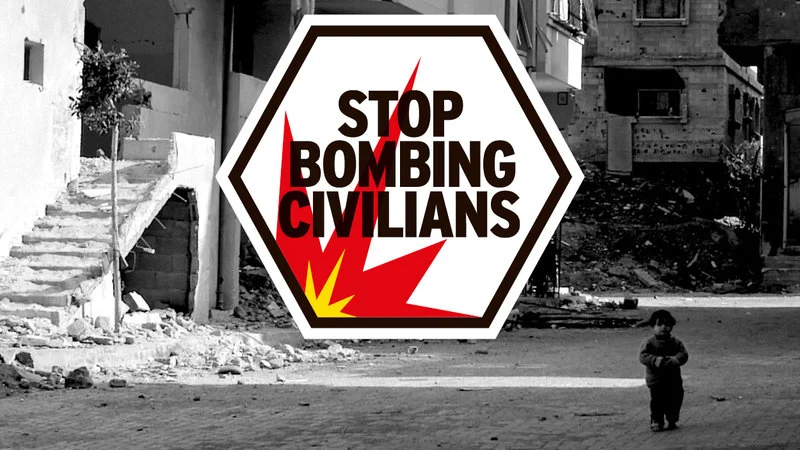
Beyond the immediate physical and mental suffering of the victims, bombings destroy and damage civilian infrastructure, such as schools and hospitals, or services, such as the waste disposal system, all of which are vital to the population. This type of damage affects the ability of state and local governments to provide basic services such as health or education. This results in inadequate medical care, the closure of many schools and universities, and a lack of fuel or damage to vehicles like ambulances, which hinders the transport of patients to medical facilities. When families flee and leave their homes, there is an exodus of workers, including doctors, nurses, and teachers, professionals on whom the functioning of the country depends.
It is often difficult to relate statistics to people’s stories; it is difficult in such a short space to reveal the lives of the people behind the numbers, and even more so when they are far away. But behind every statistic, behind every headline, article, feature, or report on the consequences of the use of explosive weapons in populated areas, there are hundreds of thousands of individual stories that need to be collected and remembered. These personal stories can humanize statistics, humanize us, and help us put pressure on international organizations to adopt political commitments that strengthen the protection of civilians against the use of explosive weapons in populated areas.
Evidence suggests that damage in terms of lives lost, injuries, and infrastructure damage is substantial in blasts and explosions. Bomb blasts also receive a high degree of public attention because of their significant effects on health in terms of death, illness, disability, and mental illness. Blast injuries not only lead to premature deaths but also consume more health care resources as compared to other injuries because they present in large numbers. Moreover, youths are most affected with more severe injuries involving multiple body organs and systems
Opinion:
Serious Effects on Human Health :
- Immediate and Long-Term Physical Trauma:Bombings result in high mortality and severe injuries, including blast injuries, amputations, and multiple organ damage, frequently affecting civilians.
- Destruction of Health Infrastructure:Attacks often destroy hospitals, ambulances, and sanitation systems, making it impossible for the remaining health services to function or for patients to be transported.
- Mental Health Crisis:Survivors and witnesses, especially children, suffer from high rates of PTSD, depression, and anxiety. These effects can last a lifetime, exacerbated by the breakdown of community structures and lack of professional mental health care.
- Environmental and Chronic Disease Impact:Bombings lead to environmental contamination (e.g., toxic soil, water pollution) and create long-term health hazards, including the disruption of treatment for chronic conditions like cancer or diabetes.
Destruction of the Country’s Economy:
- Infrastructure Destruction:Bombings directly destroy power grids, water supply lines, bridges, and industrial sites, hindering economic activity and increasing the cost of reconstruction.
- Reduction in Investment and Trade:High conflict intensity decreases foreign direct investment (FDI) and hampers trade, as uncertainty scares off investors and increases transaction costs, such as insurance premiums.
- Lost Human Capital and Productivity:The workforce is significantly reduced through deaths, injuries, and forced displacement (exodus of workers). A high percentage of victims are often prime-aged household earners, resulting in massive financial crises for families.
- Shifting Resources to Security:Governments are forced to reallocate funds from health, education, and development toward military and law enforcement, further reducing economic growth.
- Explosive weapons in populated areas:
The devastating effects of explosive weapons on children are wide-ranging and can reverberate long after conflict.
In conflicts around the world, civilians continue to endure the devastating consequences of the use of explosive weapons. Every year, thousands of children are killed, seriously injured, or have their lives severely altered – during armed conflict and long after hostilities have ended. As armed conflicts have increasingly been fought in cities, towns, villages, and other populated areas, weapons originally designed for use in the open battlefield are increasingly being used in populated areas, posing a considerable threat to civilians, particularly children.
When used in populated areas, explosive weapons often have long-lasting effects well beyond the immediate harm. Widespread destruction of essential infrastructure and contamination by explosive remnants, for example, deprive families of essential civilian services, such as water and sanitation, electricity, health care, and education.
Bombing of civilians: devastating impact on infrastructure:
The bombing of civilians in populated areas has become a familiar feature of present-day conflicts. Not only does it kill and maim civilians, but it also destroys vital public infrastructure such as bridges, ports, and hospitals. Head of advocacy at Handicap International (HI) explains how the use of explosive weapons in populated areas impacts civilians.
Let’s take a look at the example of what happens when a bridge is destroyed in an air attack. Because ships can no longer berth, cargo shipments – including foodstuffs – are interrupted, potentially causing a sharp rise in market prices and shortages in regions which rely on this infrastructure. Because it disrupts the supply chain and causes stock-outs, the bombing of a simple warehouse can also have serious consequences.
When a country becomes the target of bombing, road transporters often take safety measures – such as disbanding convoys – which reduce the volume of goods delivered. Many insurance companies no longer cover transporters who operate in affected countries. This forces transport companies to suspend their activities. Resulting shortages of food and medication can lead to an increase in malnutrition and make people with illnesses more vulnerable.
Vital water supplies:
This domino effect can also occur following the bombing of water networks. The destruction of pumping and water treatment stations and water systems deprives neighborhoods and entire districts of clean water or drinking water. Rubble or damage may also contaminate the mains water supply. This can have a horrifying impact on health. Infectious diseases, kidney infections, and typhoid increase mortality rates among the population. The destruction of a single water treatment station can affect hundreds of thousands of people.
Difficulties accessing treatment:
Attacks on hospitals also have dramatic and lasting consequences. Hospital buildings have to be immediately evacuated or destroyed beyond use. Once the bombing is over, services are almost inevitably reduced: damage makes some buildings inaccessible; some staff prefer to flee the region or country and do not return to work; medical equipment is also damaged and unusable. When the electric grid is affected, some equipment, such as incubators, no longer works. When a regional hospital closes, thousands of people find themselves without access to medical care. If patients no longer receive treatment, complications and death rates rise.
Attacks on health care during war are becoming more common, creating devastating ripple effects :
The increase use of explosive weapons in densely populated areas makes the problem worse as they cause widespread harm to civilians and critical infrastructure, including health facilities. Whether these attacks are targeted or seen as “collateral damage”, there is growing concern that they are becoming an accepted part of armed conflict – although they violate protections granted under international law.
The latest SHCC report shows that last year was the deadliest for health-care workers since reporting began a decade ago. In 2023, 480 health-care workers were killed during armed conflict, nearly double the previous year.
Between January and September 2024, the WHO has confirmed almost 700 attacks against healthcare facilities and staff in Ukraine and the Occupied Palestinian Territory alone. This has led to more than 500 injuries and nearly 200 deaths among patients and health workers.
The laws that protect health care:
The Geneva Conventions of 1949 and their Additional Protocols form the backbone of International Humanitarian Law, protecting health workers, hospitals and patients during armed conflict. These laws were established after the Second World War to ensure that, even in times of war, people can access medical care without fear of attack. Any deliberate targeting of medical services is a violation of international law and, in some cases, a war crime.
Today, every recognised state in the world has committed to complying with these laws. In 2016, the United Nations Security Council also adopted a resolution that condemns attacks on health care and calls for stronger action to ensure compliance.
Yet attacks on health care continue. Some of the most serious examples have occurred in recent armed conflicts, where hospitals and clinics have been directly targeted, often without consequences for the attackers. Earlier this year, Ukraine asked the International Criminal Court to investigate attacks against a children’s hospital in Kyiv.
The persistence of these attacks raises concerns about whether the issue is weak enforcement of the laws or whether the laws themselves need updating for modern warfare.
Some legal and medical experts argue the laws aren’t strong enough, especially with the rise of non-state armed groups such as militias. Others believe the laws are adequate but are not properly enforced.
Conflict Between Iran, Israel, and America:
The war in the Middle East causes serious effects on the world economy due to the Strait of Hormuz being closed. The prices of petrol, gas, and LPG increase. The fuel crisis causes a lot of destruction in the world. Due to inflation increases in the world, it has a bad effect on the economy. If we see the current affairs of Pakistan and South Asian countries, the schools have been closed, offices do not run properly, and businesses are shut down. Everything is not in its exact position and place. It also causes effects on the economy of the UAE, Qatar, Tel Aviv, and KSA, including America, due to drone attacks. During the last week, the stock market has performed badly. This tension is leading us towards world war 3.
According To The American Journal Bloomberg:
Gulf Economics At Risk Of Worst Slump Since 90s on Iran War:
The Iran war threatens to deal significant blows to the Gulf’s biggest economies, including Saudi Arabia, the United Arab Emirates and Qatar, if it doesn’t end soon.
Qatar and Kuwait could each see their gross domestic product contract by 14% this year should the conflict continue through to the end of April, which would mean a two-month effective halt in oil and natural flows through the Strait of Hormuz.
That’d be the worst economic slump for those two countries since the early 1990s, when Iraq’s invasion of Kuwait triggered the Gulf War.
Gauging The Impact Of Massive U.S.–Israeli Strikes On Iran:
The United States and Israel launched a major assault on Iran on February 28 with the stated aim of toppling the regime in Tehran. President Donald Trump said that the U.S.-led operation would seek to eliminate Iran’s nuclear and missile programs, destroy the country’s navy, and change its leadership. Addressing the Iranian public in an early morning video that announced the strikes, Trump said that the country “will be yours to take. This will probably be your only chance for generations.’’
Trump confirmed that Iranian Supreme Leader Ayatollah Ali Khamenei had been killed in the assault late on Saturday afternoon, and he alleged that much of Iran’s senior leadership was also dead. Israeli security officials had indicated earlier in the day that the ayatollah had been killed after his secure compound was bombed and shared the news of several other senior leaders’ deaths. Iranian media had maintained that Khamenei was alive and “steadfast and firm in commanding the field,” but they later acknowledged that he and members of his family had been killed.
“Iran considers it its legitimate duty and right to avenge the perpetrators and masterminds of this historic crime,” Iran‘s President Masoud Pezeshkian said about the ayatollah’s death.
Iran retaliated against the initial assault quickly, firing missiles at Israel and U.S. military bases in multiple Gulf states. The governments in Bahrain, Kuwait, Jordan, Qatar, and the United Arab Emirates all said they have been targeted. Iran’s Revolutionary Guard Corps vowed revenge for the killing of the regime’s longtime leader and launched another wave of strikes across the region .
The United States and Israel have launched another wave of attack, namely (OPERATION EPIC FURY), on Iran. The scale of this assault and who remains alive in the Iranian leadership are yet to be determined. But the Islamic Republic is an ideological system with a multi-layered elite and base of support. That support may have shrunk in the past few years, but it still provides the regime with a cadre prepared to use force to maintain power. The suppression of the recent uprising demonstrated that defeat abroad does not translate to weakness at home. Theocracy will likely survive the latest bombing—battered and bruised, but standing.
It is time to say farewell to arms control. The fact is that the Iranians were engaged in serious negotiations with U.S. officials. News accounts indicate that Iranian Foreign Minister Abbas Araghchi had tabled proposals that called for the suspension of uranium enrichment for several years before allowing it to then resume at low levels. Perhaps more could have been extracted from Iran if diplomacy had more time than a mere two weeks and two sessions. The Iranian side was trying to be imaginative in addressing U.S. concerns. All this has now ended, as the Trump administration opted for military attacks while the talks were unfolding. It would not be unreasonable for Iranian officials to assume that diplomacy was a mere ruse before the bombs fell.
The Strait Of Hormuz: A U.S.A – IRAN Maritime FlashPoint :
The narrow and congested Mideast waterway has become a site of escalating U.S.-Iran tensions. Trump’s war on Iran has placed it in the middle of the battlefield, driving a spike in oil and gas prices worldwide.
The U.S.-Israeli war with Iran has ignited a regional conflict that is strangling shipping traffic through the Strait of Hormuz—the choke point for nearly one-fifth of the world’s oil and natural gas supply—and roiling energy markets.
After Iranian Supreme Leader Ayatollah Ali Khamenei was killed in a strike on February 28, Tehran retaliated by attacking U.S. military bases across the region and threatening ships in the Strait of Hormuz, a twenty-one-mile-wide waterway that abuts southern Iran at its narrowest point. At least three ships were targeted in the strait the day after the initial U.S.-Israeli strikes, and in the days that followed, the United States and Iran have continued to attack each others’ maritime infrastructure. Gulf countries, which rely on unimpeded travel through the strait to access global oil markets, now face shipping disruptions. Ship trafficking data showed a 70 percent drop in vessels traversing the strait after the launch of Operation Epic Fury.
U.S.-Iran tensions had been escalating for weeks, as efforts to reach a new nuclear deal were unsuccessful. Tensions spiked when Iran temporarily closed the Strait of Hormuz to conduct live fire drills while Foreign Affairs Minister Abbas Araghchi participated in nuclear talks with the United States, raising concerns that Iran could use the strait to stymie global oil supplies in response to U.S. aggression.
Though Iran has not formally announced the strait’s closure, authorities have reportedly warned ships not to cross the waterway as Tehran puts pressure on the strait as a point of leverage in the war. Iran claimed responsibility for attacking a ship crossing the strait on March 11, and announced that any vessel belonging to the United States, Israel, or their allies in the area were considered “legitimate targets.” Iran’s new supreme leader, Mojtaba Khamenei, announced on March 12—his first known public comments since taking over the position from his late father—that he would continue to keep the strait blocked off.
These Iranian attacks came after the U.S. military said it had struck sixteen Iranian mine-laying ships in the waterway in what it called “the most intense day of strikes” yet on March 10. Since the war’s outbreak, the Donald Trump administration has also targeted Iran’s navy, destroying its warships and attempting to hamper its ability to fully block off the strait. Trump also said he was considering “taking over” the strait and threatend Iran against halting oil flows there. Trump has also suggested he would implement a program selling insurance for ships traveling through the Gulf to ensure “the free flow of energy to the world,” possibly via escorts from the U.S. Navy.
The conflict has also renewed discussions of using emergency energy stockpiles. Members of the International Energy Agency unanimously agreed to order the release of 400 million barrels of emergency crude, its largest tranche ever, and more than double the last release in the wake of Russia’s 2022 invasion of Ukraine. Aside from the United States, several Asian countries, including China, India, and Japan, rely heavily on oil that passes through the strait and are at high risk of experiencing supply disruptions.
Iran’s use of the Strait as a bargaining chip is not unprecedented. Iranian officials threatened to close the waterway in April 2019 after Trump ended sanctions waivers for importers of Iranian oil, effectively eliminating a vital source of revenue for Tehran. The United States has long considered freedom of navigation a vital interest, setting the stage for confrontation should Iran try to block shipping in the waterway. During the Iran–Iraq War, U.S. naval ships escorted oil tankers through the strait, and in 1987, U.S. forces fired on Iranian forces laying mines in the Gulf, killing four sailors.
Conclusion :
Bombing is highly destructive because it harms people health and damage a country economy . Bombing causes injuries , deaths , trauma , allergies problems , pollution and long-term health problems. It also destroy the states infrastructure. This reduces productivity , increases healthcare costs , and slow economic growth which pushes countries back for years. Therefore , bombing has devastating effects on both the population and the economic stability of a country.Countries should try to resolve their problems at the table and not invest their resources in buying military equipment . It will be a Long-lasting in the world.
About the Author
Faizan Monib Tufail is a final-year LL.B. (PU Program) student at Pakistan College of Law. He is academically engaged in legal studies with a growing interest in contemporary legal, social, and policy issues.
Bibliography :

https://www.icip.cat/perlapau/en/article/magnitude-and-impact-of-the-use-of-explosive-weapons-in-populated-areas/

https://www.hi-canada.org/en/news/bombing-of-civilians-devastating-impact-on-infrastructure

https://theconversation.com/attacks-on-health-care-during-war-are-becoming-more-common-creating-devastating-ripple-effects-237484

https://www.cfr.org/articles/gauging-the-impact-of-massive-u-s-israeli-strikes-on-iran

https://www.cfr.org/articles/strait-hormuz-us-iran-maritime-flash-point